OpenAI Is Adding Watermarks to AI-Generated Text. But What Does That Really Change?
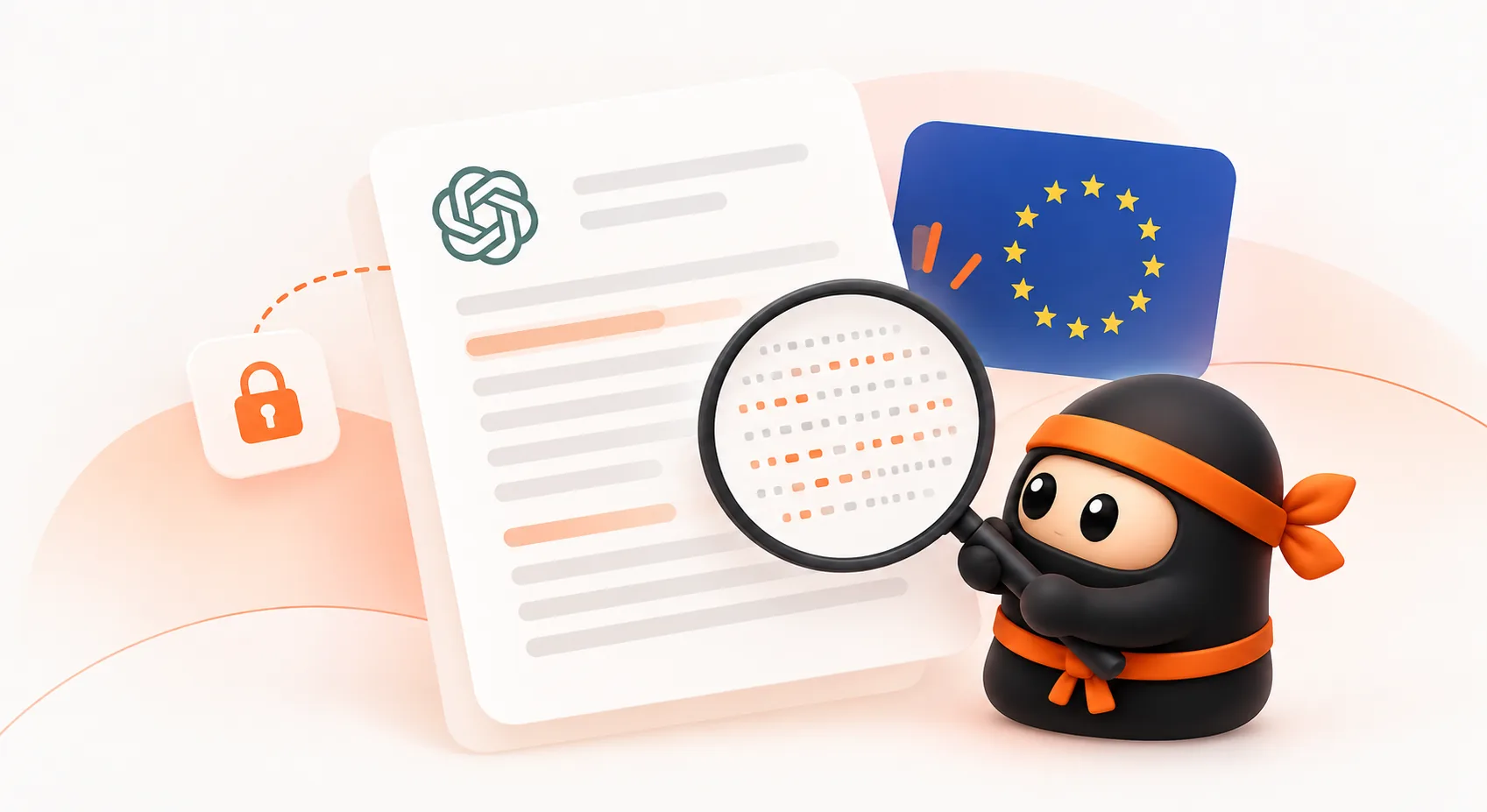
OpenAI is preparing to introduce invisible watermarks in ChatGPT-generated text across the European Union. It’s an important step toward AI transparency, but it also raises an interesting question: how much can we really learn about a piece of writing from knowing that AI was involved?
What’s Changing?
On October 5, 2026, OpenAI announced its approach to text watermarking under the EU AI Act.
Over the coming weeks, eligible text generated through ChatGPT and Codex in the European Union will begin carrying invisible watermarks. These aren’t hidden labels or special characters that readers can spot. Instead, OpenAI’s technology, called textGrain, introduces subtle statistical patterns into the model’s word choices.
The company is also allowing API customers worldwide to opt in to watermarking, while access to its text watermark detector will initially be limited to approved researchers and expert organizations.
The goal is straightforward: make it easier to identify content produced with AI systems.
But the technology is far from perfect.
The Problem With Detecting AI Text
One of the most interesting parts of OpenAI’s announcement is how openly the company acknowledges the limitations of its own technology.
According to OpenAI’s testing, replacing just 10% of the words in a watermarked passage with synonyms reduced detection rates from approximately 92% to 66%. Replacing 25% reduced detection to 17%.
Shorter texts are also harder to identify reliably.
These findings highlight something that has been part of the AI detection debate for years: identifying the origin of a text is much more complicated than it might initially seem.
A watermark can provide evidence that an AI system was involved. But it cannot tell us how much work a person contributed afterward.
Consider a student who uses ChatGPT to brainstorm ideas before writing an essay, or a marketer who generates a first draft and then spends hours rewriting it. In both cases, AI may have played a role, but that doesn’t tell us much about the final result.
And importantly, the absence of a watermark doesn’t prove that something was written by a human.
Transparency Is Good. But It Isn’t the Whole Story.
We think greater transparency around AI-generated content is a positive development.
As AI becomes part of everyday writing, people deserve better ways to understand where information comes from. This matters especially in education, journalism, and professional communication.
At the same time, there’s a risk of treating AI identification as a judgment about the quality or legitimacy of a text.
AI-generated doesn’t automatically mean low-quality. Human-written doesn’t automatically mean trustworthy.
A carefully researched article developed with AI assistance may be more useful than a poorly written article created entirely by a person.
The same applies in reverse. A completely AI-generated article can sound convincing while containing inaccurate information or offering very little original insight.
That’s why we believe the more interesting question isn’t simply «Was this written by AI?»
It’s «Is this text accurate, useful, original in its thinking, and appropriate for its audience?»
Watermarking can help answer questions about origin. It cannot answer those questions about quality.
Where Do AI Writing Tools Fit In?
As AI becomes more common, writing tools are evolving beyond simple text generation.
People increasingly use AI to organize ideas, edit drafts, improve clarity, and adjust their writing for different audiences.
Tools such as Humanio AI are part of this broader writing workflow. Its AI humanizer helps users refine wording, improve readability, and make drafts sound more natural and appropriate for their intended audience.
These are writing improvements, not solutions to watermarking or guarantees about AI detection results.
Ultimately, the value of any writing tool depends on how thoughtfully it’s used.
OpenAI’s new watermarking initiative is another sign that AI-generated content is becoming a permanent part of the digital world.
Transparency will matter more as the technology develops. But so will our ability to distinguish between identifying a text’s origin and evaluating its actual value.
Knowing that AI contributed to something can be useful context. It shouldn’t be the end of the conversation.
The future of writing may not be about choosing between human and AI-generated content, but about understanding how the two work together.