Humanizer for Cover Letters
Cover letters are one of the easiest places for AI writing to sound polished but not believable. The draft may mention the right role, reflect the job description, and look professionally structured, yet still feel too broad, too formal, or too interchangeable. That is where Humanio helps. We give you a humanizer for cover letters that improves tone, flow, and readability while keeping your real experience, your core message, and your professional intent intact.





- Bypass all popular AI detectors
- Keep the original meaning
- Choose the desired level of readability






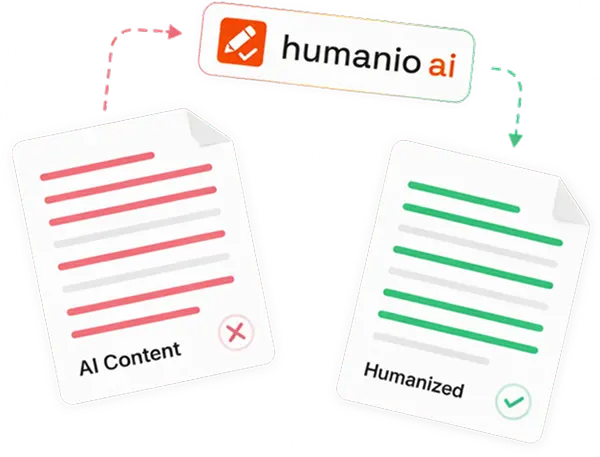
If you already use AI to speed up cover letter writing, the goal is not to erase that workflow. The goal is to make the final version sound more like you and less like a template. Humanio helps you humanize cover letters without flattening the details that make an application credible.
You still need judgment, truth, and role-specific personalization. What we help with is the final writing layer: the part that makes an AI cover letter feel more natural, more personal, and more ready to send.
Humanio works as a humanizer for cover letters by improving tone, sentence flow, and readability without changing the real substance of your application.
A strong cover letter humanizer should preserve truthful experience, professional tone, and company-specific details instead of replacing them with generic polish.
Humanio is useful for standard job applications, career pivots, freelance proposals, and other recruiter-facing writing that starts with AI assistance.
The best workflow is still draft, humanize, personalize, and review before you submit anything.
Humanize Cover Letters Without Losing Your Real Story
Most people do not want a humanizer for cover letters because they need an entirely new letter. They want help turning a usable draft into something that reads like it came from a real person with a real reason for applying. That difference matters because the best cover letters are not only clear. They sound intentional.
A raw AI cover letter often gets the structure right. It introduces the role, summarizes background, and closes politely. The problem is that many AI drafts arrive with the same emotional texture. The writing feels safe, generic, and slightly overprocessed. Even when every sentence is technically correct, the overall result can feel low-signal.
That is why Humanio focuses on refinement instead of random rewriting. We help humanize cover letters while preserving the parts that actually matter:
your real qualifications
the role you are applying for
company-specific details you want to mention
your professional tone
the personal voice that helps the letter sound believable
If those parts disappear, the rewrite is not helping. A better cover letter should still sound like your application. It should just sound less robotic, less templated, and more natural to read.
That is especially important for recruiter-facing writing. Hiring managers are not reading your cover letter like an essay grader. They are reading it as an early trust signal. They want to see whether the writing sounds specific, thoughtful, and aligned with the role. Humanio helps move a draft closer to that standard without asking you to rebuild everything from scratch.
Why AI Cover Letters Still Feel Generic to Hiring Managers
The biggest weakness in many AI cover letter drafts is not grammar. It is sameness. The structure is familiar, the enthusiasm feels prepackaged, and the language sounds like it could be sent to dozens of companies with only minor edits.
That usually shows up in a few patterns:
broad openings that could fit any employer
vague claims about passion, dedication, or strong communication
polished phrasing with very little real specificity
repetitive sentence rhythm that makes the letter feel predictable
closing paragraphs that sound polite but empty
This is why an AI cover letter can feel finished without feeling persuasive. The words are there, but the writing does not create much confidence. It does not clearly sound like a person who understands the role, knows what they can contribute, and chose these words on purpose.
Professional tone can also become part of the problem. AI tends to over-standardize it. Instead of sounding credible, the letter starts sounding ceremonial. Instead of sounding confident, it sounds padded. Instead of sounding sincere, it sounds like it is performing sincerity.
That is a poor fit for job applications. A strong cover letter should still feel polished, but it also needs a human center. The best letters make room for motivation, context, and judgment. They sound like someone is applying, not like a format is being filled in.
Humanio helps address that deeper issue. We do not just swap out obvious phrases. We help improve sentence movement, soften stiff wording, and make the letter easier to trust as writing. If you are looking for an AI humanizer for cover letters, that is the real job to be done.

How Humanio Works as a Humanizer for Cover Letters
The workflow is straightforward because the value comes from the refinement itself.
Start with your AI-assisted cover letter draft.
Paste it into Humanio.
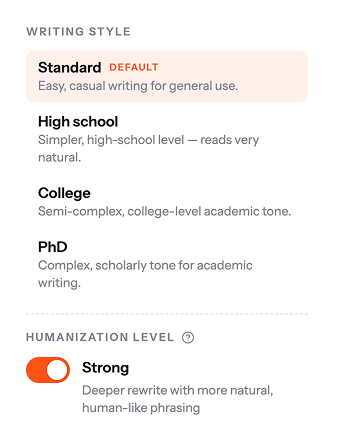
Let us improve the tone, natural phrasing, and overall flow.
Review the revised version and add the final personal details before sending it.
This works well because many drafts are already directionally correct. You may already have the right role, the right experience points, and the right general structure. What is missing is the writing quality that makes those points feel specific and convincing.
Humanio helps humanize cover letters by working on the patterns that often make them feel machine-shaped:
stiff transitions between paragraphs
obvious AI phrasing
generic opening language
repetitive sentence shape
over-polished wording that reduces credibility
We focus on making the writing read more naturally while preserving the meaning behind it. That makes the tool useful in a practical application workflow. You can still use AI for speed, idea capture, or first-draft structure. Then you use Humanio to refine the final version into something closer to publish-ready professional communication.
This is also why Humanio fits different application styles. Some users need concise corporate cover letters. Some need letters that show more personality for startups, creative roles, or mission-driven organizations. Others need cleaner professional language for internal applications or cross-functional roles. A cover letter humanizer should support those differences instead of pushing every draft into the same final voice.
A Humanizer for Cover Letters Should Keep Authentic Tone and Role Fit Intact
One of the biggest concerns around a cover letter humanizer is losing the details that make the letter yours. That concern is valid. A draft can absolutely become smoother and weaker at the same time if the rewrite strips out specifics and replaces them with safer language.
That is why Humanio treats preservation as part of quality. The point is not to make every sentence sound more dramatic. The point is to keep the things that give your application weight:
your actual accomplishments
your real motivation for applying
the specific role and company context
the professional tone expected in the hiring process
the personal voice that makes the letter feel authored
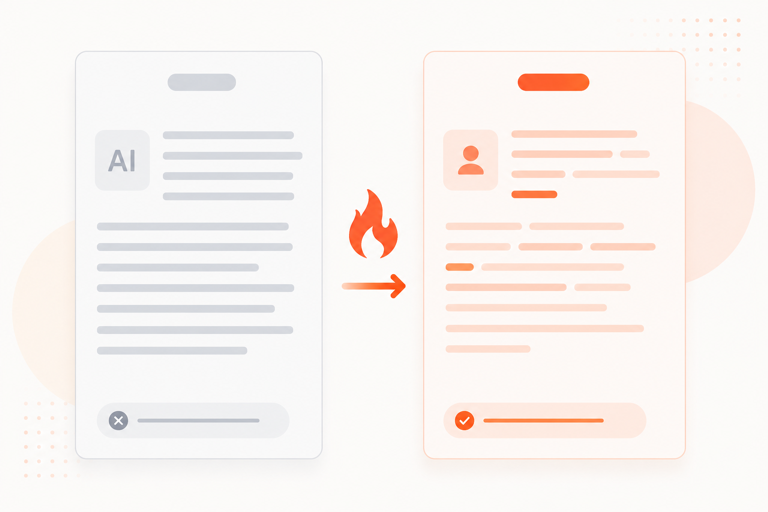
This matters because cover letter writing sits in a narrow range. If the tone is too flat, the letter feels generic. If it is too casual, it can feel careless. If it is too polished, it can feel synthetic. A good humanizer for cover letters needs to improve the flow without damaging that balance. It should help you keep an authentic tone that still feels appropriate for serious job applications.
Humanio helps by making the writing sound more natural without changing the core reality of what you are saying. Your experience should still sound like your experience. Your motivation should still sound like a reason you would actually give. Your letter should still feel professional enough for the job applications you are pursuing.
That balance also matters when you mention company-specific details. If you include a product, team, mission, or recent initiative as part of your reason for applying, those details should stay grounded and readable. They should not get washed out into generic praise. Humanio helps you keep that role fit visible while improving the way the writing flows around it.
If you want a broader category view before choosing a workflow, our page on the best AI humanizer can help you compare the space more clearly.
Humanize Cover Letters for Job Applications, Career Pivots, and Freelance Proposal Letters
The need to humanize cover letters is not limited to one hiring scenario. The writing problem shows up anywhere people use AI to accelerate professional applications but still need the final result to sound authored.
For traditional job applications, that may mean making an AI cover letter sound more specific to the role and less like a mass template. For career pivots, it may mean helping a draft explain transferable skills in a way that feels clearer and more credible. For freelance proposals, it may mean improving tone and readability without losing the direct business case. The same is true for short application letters used in internal hiring processes or more targeted outreach.
Humanio can support all of those use cases because the underlying challenge is similar. The draft already contains useful information, but the final writing still needs:
more natural sentence rhythm
clearer motivation
more believable professional voice
less generic enthusiasm
a stronger first impression
That is especially helpful when you are applying across multiple roles. AI can help you build first drafts faster, but speed alone is not enough. If every application letter sounds like the same person wrote it for the same company, the efficiency starts to work against you. Humanio helps you keep the drafting advantage while improving the final quality of each letter.
Freelancers and consultants can use the same workflow for proposal-style writing too. A proposal letter often needs the same things a cover letter does: a direct opening, a clear reason for reaching out, relevant experience, and a tone that feels confident without sounding canned. Humanio helps polish that kind of recruiter-facing writing into something cleaner and more human. It is also useful when you want application letters to sound more personal without becoming too casual.
If your work also includes longer educational or structured writing, our essays use case shows how the same refinement approach can support adjacent formats.
Why Humanio Is a Better Fit Than Generic Cover Letter Humanizers
Many competitors in this space position themselves around one-click rewriting, instant transformation, or detector-heavy messaging. That can make the workflow sound simpler than it really is. In practice, a useful humanizer for cover letters has to do more than make a letter look different on the surface.
It has to help the writing sound more authored.
That is where Humanio is a better fit. We focus on practical writing quality:
more natural tone
clearer sentence flow
better readability
less robotic phrasing
stronger alignment between the draft and the person sending it
We are not trying to turn your cover letter into a generic “improved version” that could belong to anyone. We are trying to help you keep the speed benefits of AI drafting while making the final result feel more personal, more believable, and more ready for real submission.
That distinction matters because cover letters are trust documents. Even when they are short, they carry a lot of interpretive weight. The reader is not only asking whether your background fits. They are also asking whether your communication sounds thoughtful, relevant, and grounded. Humanio helps strengthen that part of the application, including the early impression that forms during recruiter screening.
This also makes the workflow more practical over time. If you regularly use AI to draft job applications, you do not need to start from zero each time. You need a way to turn rough drafts into stronger final versions faster. That is the role Humanio is built to play.
If cover letters are only one part of your professional writing workflow, you can also explore how Humanio supports broader marketing content and learn more about our general editing process in this guide on how to humanize AI text.
Final Review Still Matters Before You Send Any Cover Letter
Even the best cover letter humanizer should be part of your process, not the whole process. Once Humanio improves the draft, take one more pass before you submit it. That last review protects the details that matter most in job applications.
Focus on a few high-value checks:
Does the opening sound like something you would actually say?
Does the letter clearly connect your experience to this specific role?
Did any company-specific detail become too broad or too generic?
Does the professional tone fit the employer and the position?
Are your examples, achievements, and claims still accurate?
Does the close sound confident and human instead of formulaic?
This last pass is also where you decide whether the wording sounds natural out loud. Read the letter once as if you were the person sending it and once as if you were the person receiving it. That simple check can catch stiff phrasing, over-explaining, and lines that still sound more machine-produced than human.
That final review is not busywork. It is where you confirm that the writing now sounds more natural without drifting away from the reason you are applying. AI can help you draft. Humanio can help you refine. You should still make the final call on whether the letter represents you well.
If you are ready to move from rough AI drafts to stronger application writing, you can review our pricing to see where Humanio fits into your workflow.
Frequently asked questions




Humanio gives you a stronger humanizer for cover letters because the focus stays on better writing, not just different writing. You keep the speed of AI drafting, but you get a final version that sounds more natural, more personal, and more credible to real readers. If you want a humanizer for cover letters that helps AI-assisted job applications sound more natural without losing your real story, start with Humanio. We help you refine rough drafts into cover letters that feel clearer, more believable, and more ready to send.