Humanizer for Reports
Business reports are one of the easiest places for AI writing to sound polished but still feel lifeless. The structure may be correct. The summary may mention the right numbers. The sections may look organized and professional. Even so, the final document can still feel too formal, too repetitive, or too obviously machine-shaped for the audience reading it. That is where Humanio helps. We give you a humanizer for reports that improves tone, flow, and readability while protecting the structure, clarity, and professional meaning that business users actually need.





- Bypass all popular AI detectors
- Keep the original meaning
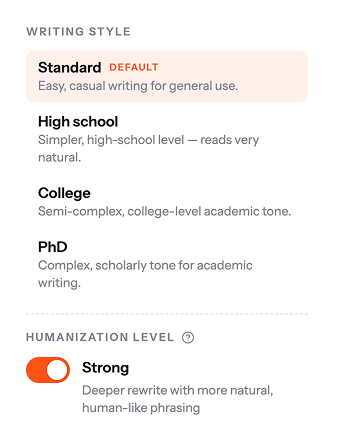
- Choose the desired level of readability






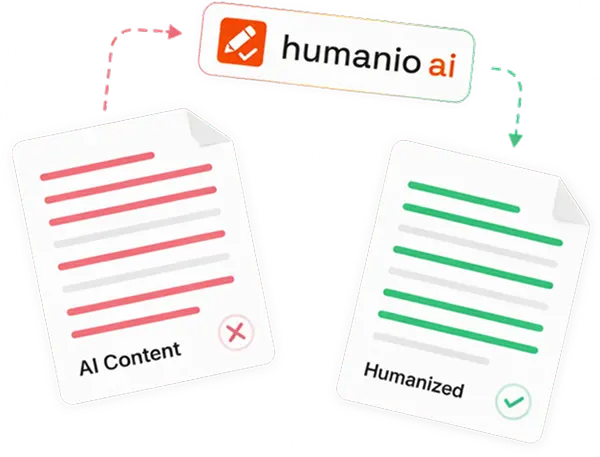
If you already use AI to speed up report writing, the goal is not to erase that process. The goal is to keep the efficiency while making the final version sound more natural, more credible, and more appropriate for the people receiving it. Humanio helps you humanize reports without flattening important details, weakening your executive summary, or turning the whole document into generic business language.
This page is about business reports specifically. That includes internal reporting, stakeholder-facing updates, management reports, project briefs, and client-facing summaries. It is not about school reports or academic assignments. The writing problem here is business communication, and the solution needs to reflect that.
Humanio works as a humanizer for reports by improving tone, sentence flow, and readability without changing the factual meaning of the document.
A strong report humanizer should preserve structure, audience fit, executive clarity, and professional tone instead of replacing them with vague polish.
Humanio is useful for business reports, executive summaries, stakeholder updates, project briefs, management reports, and other business-facing writing that starts with AI assistance.
The best workflow is still draft, humanize, review, and tailor before you share any report with leaders, clients, or internal teams.
Humanize Reports Without Losing Structure or Clarity
Most people looking for a humanizer for reports do not want a completely different document. They want help taking a usable AI-assisted draft and turning it into something that sounds more like a clear, credible business report written by a person who understands the audience. That difference matters because strong report writing is not only about getting the facts onto the page. It is about presenting those facts in a way that people can trust, scan quickly, and act on.
A raw AI-generated report can be useful. It can help organize points, assemble a first draft, and create a starting structure for summaries and updates. The problem is that AI business reports often default to the same patterns. The tone becomes too evenly formal. The phrasing starts repeating itself. The report sounds polished, but not especially helpful.
That is why Humanio focuses on refinement instead of surface-level rewriting. We help humanize reports while preserving the parts that cannot be treated casually:
the core meaning of the report
the report structure and section logic
key facts, figures, and status details
the audience-specific purpose of the document
the professional tone needed for business communication
If those parts drift, the rewrite is not useful. A better report should still sound like your update, your summary, or your recommendation. It should just sound less robotic, less templated, and more natural for the reader moving through it.
That is especially important in business settings because reports are often read quickly. Leaders scan. Clients skim. Internal teams look for decisions, risks, and next steps. If the writing feels too dense, too generic, or too over-processed, the information may technically be there but still land weakly. Humanio helps move the document closer to writing that is clear, readable, and worth trusting. That is what makes readable reports more useful in real business communication.
Why AI Business Reports Still Sound Too Formal or Generic
The biggest weakness in many AI-generated reports is not that they are inaccurate. It is that they often sound like they were written by a system trying to imitate professionalism from a distance. The wording is polished, but the document can feel emotionally flat, structurally repetitive, and disconnected from the actual audience.
That usually shows up in a few familiar patterns:
repetitive reporting language across sections
overly formal phrasing that slows down the reading
executive summaries that sound clean but low-signal
generic business tone that could fit almost any company
report writing that feels more processed than purposeful
This is why AI-assisted business reports can seem fine at first glance and still fail to carry enough weight. A report should not only be technically correct. It should also feel clear, intentional, and tailored to the person reading it.
Professional tone is part of this problem. AI tends to over-standardize it. Instead of sounding confident, the text becomes stiff. Instead of sounding clear, it becomes padded. Instead of sounding useful, it starts sounding like general business language arranged into report sections.
That is a poor fit for business communication. A management update, client report, or stakeholder summary needs a readable structure, but it also needs a human sense of emphasis. Some points matter more than others. Some risks deserve sharper phrasing. Some recommendations should sound more direct. Humanio helps improve those signals by making the writing feel more natural without making it casual or imprecise.
If you are looking for an AI humanizer for reports, that is the real need behind the keyword. Not just different wording, but more useful business writing.

How Humanio Works as a Humanizer for Reports
The workflow is straightforward because the value is in the final refinement pass.
Start with your AI-assisted business report, summary, or project brief.
Paste it into Humanio.
Let us improve tone, natural phrasing, and readability.
Review the revised version and tailor it to the audience before sharing.
This works because most business-report drafts do not fail because the content is missing. They fail because the content is delivered in language that sounds too generic. The facts may already be in place. The sections may already be there. The problem is that the writing does not yet feel as clear, credible, or audience-aware as it should.
Humanio helps humanize reports by working on the patterns that often make AI business writing feel machine-produced:
stiff transitions between sections
repetitive summary phrasing
overly formal sentence structure
generic recommendation language
wording that sounds polished but hard to scan
We focus on improving the language while preserving the meaning behind it. That makes the tool practical for real business-report workflows. You can still use AI for drafting speed, first-pass organization, and summary generation. Then you use Humanio to turn that rough material into something more readable before the final delivery pass.
This is also why Humanio works across multiple business-report formats. Some users need sharper executive summaries. Some need clearer client reports. Some need better project briefs, stakeholder updates, or internal management reports. A humanizer for reports should support those differences instead of forcing everything into the same generic final voice.
A Humanizer for Reports Should Keep Structure and Executive Clarity Intact
One of the biggest concerns around a report humanizer is losing the structure that makes the document useful. That concern is valid. A report can become smoother and weaker at the same time if the rewrite softens the meaning, removes emphasis from key points, or turns a practical business update into broad professional filler.
That is why Humanio treats preservation as part of quality. The point is not to make every sentence sound more elegant. The point is to keep the parts that give a report business value:
executive summaries that still communicate the real takeaway
project briefs that still support the intended action
stakeholder reports that still match the audience
structure that remains easy to scan and follow
factual accuracy that does not drift during rewriting
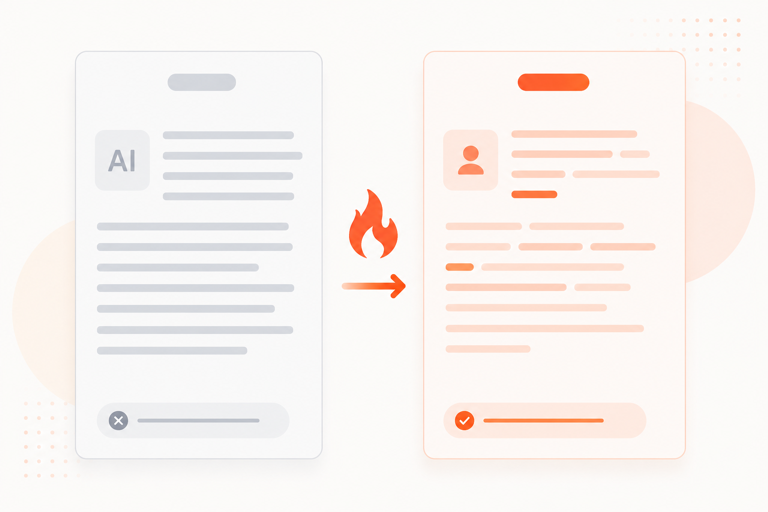
This matters because business reports serve different audiences with different expectations. A management report may need tighter prioritization. A client report may need clearer reassurance and context. A stakeholder report may need more direct language around risk, progress, or decisions. Humanio helps improve the tone and readability around those needs without flattening them into one standard style.
That is also why a humanizer for reports should not break business structure. Your headings, sections, and core logic still matter. Humanizing the writing should make the document easier to read, not less usable for the people relying on it. Humanio helps improve report flow while keeping the underlying business communication intact.
If you want a broader category comparison before choosing a workflow, our page on the best AI humanizer can help you evaluate the space.
Useful for Stakeholder Reports, Management Reports, and Client Updates
The need to humanize reports is not limited to one business format. The same writing problem shows up across many report types that start with AI assistance and still need a more human final pass.
For stakeholder reports, that may mean making status updates feel clearer and more credible without sounding too polished. For management reports, it may mean tightening the executive summary so the most important message becomes easier to spot. For client reports, it may mean softening stiff language while keeping the document professional and reassuring.
Humanio supports those use cases because the underlying challenge is the same. The draft already contains useful business information, but the final writing still needs:
more natural business tone
clearer report flow
stronger readability for fast scanning
better audience fit
less robotic phrasing
This is especially useful when you create reports at volume. Teams often use AI to accelerate recurring reporting, weekly updates, quarterly reviews, and client documentation. That can save time, but it also creates the risk that every report starts sounding the same. Humanio helps keep the efficiency while making each report feel more tailored and more intentional.
It also helps with adjacent materials like project briefs and executive summaries. Those formats often carry the highest pressure because people read them first and use them to decide how much attention to give the rest of the document. If the summary sounds generic, the whole report can feel weaker. Humanio helps improve that first-impression layer without changing the core business meaning.
If your broader writing workflow also includes general cleanup and revision, our guide on how to humanize AI text can help connect report writing to a wider editing process.
Why Humanio Is a Better Fit Than Generic AI Humanizers
Many competitors ranking for this keyword are still broad category pages. They talk about making text sound human, smoothing AI patterns, or improving general writing quality. That can be useful, but it does not fully address what business-report writers actually need.
Reports are functional documents.
A humanizer for reports has to do more than make a paragraph look less synthetic. It has to help preserve structure, audience fit, credibility, and business clarity while improving the writing itself. That is where Humanio is a better fit. We focus on practical improvements that matter in business reports:
more natural business tone
clearer executive summaries
stronger readability
less generic reporting language
better alignment between the report and the person or team behind it
We are not trying to turn your report into a generic “better version” that could belong to any team. We are trying to help you keep the speed benefits of AI-assisted drafting while making the final result feel more credible, more readable, and more useful in real business communication.
That distinction matters because reports depend on trust. Readers are not only checking whether the document exists. They are deciding whether the language feels clear, whether the tone matches the context, and whether the report sounds like it came from someone who understands the message being delivered. Humanio helps strengthen that part of the document.
This also makes the workflow more sustainable over time. If you regularly use AI to speed up updates, reporting cycles, or recurring summaries, you do not want to rebuild every draft manually from scratch. You want a reliable way to turn rough material into stronger final reports faster. That is the role Humanio is built to play.
If your work also overlaps with adjacent professional formats, you can also explore our pricing to see how Humanio fits into a broader business-writing workflow.
Final Review Still Matters Before You Share a Report
Even the best humanizer for reports should be part of your process, not the entire process. Once Humanio improves the draft, take one more pass before you send it to leadership, clients, or internal teams. That final review protects the details that matter most in business reporting.
Focus on a few high-value checks:
Does the summary still match the real takeaway?
Is the report structure still easy to scan?
Did any recommendation become too vague or too soft?
Does the tone fit the audience receiving the report?
Are the facts, numbers, and status details still accurate?
Does the document still sound like something your team would stand behind?
This last pass is also where you check for practical business readability. A section may be clear in isolation but too dense in the context of the whole report. A sentence may be polished but still harder to scan than it should be. That final review is often where a strong report becomes a useful one.
That does not weaken the workflow. It completes it. AI can help you assemble the draft. Humanio can help humanize reports so they feel more natural and more credible. You still make the final call on whether the document is ready to be shared.
Frequently asked questions





Humanio gives you a stronger humanizer for reports because the focus stays on better writing, not just different writing. You keep the speed of AI drafting, but you get business reports that sound more natural, more credible, and more useful to the people reading them. If you want a humanizer for reports that helps AI-assisted business writing sound more natural without losing structure or meaning, start with Humanio. We help you refine rough drafts into reports that feel clearer, more readable, and more ready to share.