Humanizer for Screenplays
Screenplays are one of the easiest places for AI writing to look clean on the page but fall apart when spoken aloud. A scene can be structured correctly. The character lines can be grammatically fine. The story beat can land in roughly the right place. Even then, the script may still sound stiff, too even, or too obviously machine-shaped when real people say the lines. That is where Humanio helps. We give you a humanizer for screenplays that improves dialogue flow, spoken rhythm, and script readability while protecting the scene intent and structure that make the draft usable.






- Bypass all popular AI detectors
- Keep the original meaning
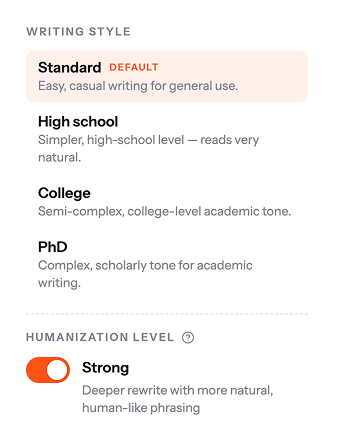
- Choose the desired level of readability






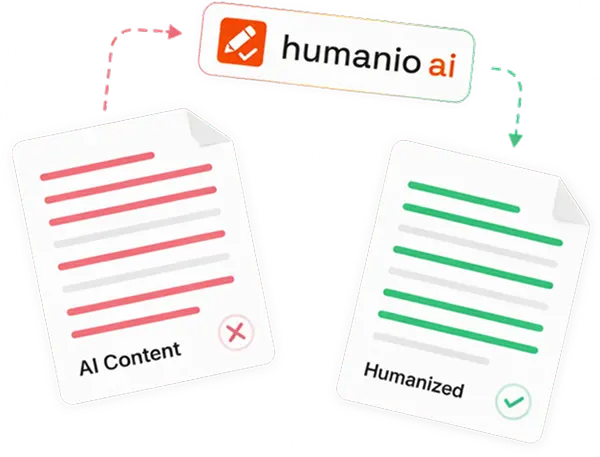
If you use AI to speed up scriptwriting, outlining, or early screenplay drafts, the goal is not to erase that workflow. The goal is to keep the speed while making the final result sound more natural, more performable, and more believable. Humanio helps you humanize screenplays without flattening scene beats, weakening character dialogue, or turning every page into the same generic script voice.
What matters here is not only how the writing reads in silence. It is how the writing sounds in motion. Screenplay pages have to survive table reads, spoken delivery, and scene-level revision. That is why the final polishing step matters so much.
Humanio works as a humanizer for screenplays by improving tone, dialogue rhythm, and readability without changing the core meaning of the scene.
A strong screenplay humanizer should preserve scene beats, character intent, spoken cadence, and script structure instead of replacing them with generic polish.
Humanio is useful for screenplay drafts, dialogue passes, scriptwriting revisions, narrative script cleanup, and read-aloud review that starts with AI assistance.
The best workflow is still draft, humanize, read aloud, and revise before you keep, share, or perform any script pages.
Humanize Screenplays Without Losing the Scene
Most writers looking for a humanizer for screenplays do not want a totally different draft. They want help taking an AI-assisted script page and turning it into something that sounds more like a scene meant to be performed by real people. That difference matters because screenplay writing depends on more than clarity. It depends on rhythm, tension, character energy, and the way the page translates into spoken action.
A raw AI screenplay draft can still be useful. It can help build scene skeletons, propose alternate dialogue, or accelerate first-pass drafting. The problem is that AI screenplay writing often defaults to the same habits. Characters speak too evenly. Lines resolve too neatly. Exposition arrives in polished but unnatural sentences. The result may be readable, but it does not always feel performable.
That is why Humanio focuses on refinement instead of shallow rewriting. We help humanize screenplays while preserving the things that actually matter:
your scene purpose
your character dynamics
your dialogue intent
your script flow
the authentic tone that makes the scene feel like it belongs in your screenplay
If those parts drift, the rewrite is not helping. A better draft should still feel like your script, your scene, and your characters. It should just sound less robotic, less templated, and more natural when the words leave the page.
This is especially important in scriptwriting because performance pressure reveals weak lines quickly. A line that seems polished in silence may sound false the moment it is spoken. A scene transition that looks smooth on the page may feel mechanical when actors or readers move through it. Humanio helps reduce that disconnect by making screenplay language feel more believable without changing the structural purpose of the scene.
Why AI Screenplay Writing Still Sounds Too Written
The biggest weakness in many AI-generated screenplays is not that they are unreadable. It is that they sound written in the wrong way. Dialogue often arrives with too much symmetry. Characters explain themselves too cleanly. Sentences run with a similar cadence even when the emotional context should be shifting.
That usually shows up in a few familiar patterns:
flat dialogue that sounds interchangeable across characters
stiff lines that read more like polished prose than speech
generic scene writing that states emotion without carrying it
even cadence that drains tension from exchanges
unnatural speech that no actor would want to say as written
This is why AI screenplay writing can feel functional but still fail as scriptwriting. The scene may technically work. The beat may still be visible. But the words do not feel like they belong inside a living performance.
Spoken rhythm is the real pressure test here. Scripts are not essays. They do not succeed by sounding formally complete. They succeed when the line length, phrasing, and emotional movement work in real speech. If the writing is too processed, too explanatory, or too balanced from line to line, the script starts sounding artificial.
Character dialogue suffers in particular. AI often makes everyone speak with the same level of neatness. That flattens character contrast. Different characters may have different goals in the scene, but if they all sound equally polished, the scene loses energy. Humanio helps address that by improving line flow, softening repetitive structures, and making the script feel more like spoken writing rather than generated text.
If you are specifically looking for an ai humanizer for screenplays, that spoken-performance problem is the real reason the category matters. The page should not just read better. It should sound better when the scene is heard.
If you need a humanizer for screenplays, that is the real problem it should solve. Not just making the page different, but making the page more performable.

How Humanio Works as a Humanizer for Screenplays
The workflow is simple because the value is in the last meaningful pass, not in extra complexity.
Start with your AI-assisted screenplay draft, scene, or dialogue section.
Paste it into Humanio.
Let us improve tone, natural phrasing, and read-aloud flow.
Review the revised version and continue your scene-level rewrite from there.
This works because most screenplay drafts do not fail because they lack events. They fail because the lines arrive in language that sounds too processed. The scene may already contain the right conflict, the right progression, and the right core exchange. The problem is that the wording does not yet sound like dialogue or action intended for performance.
Humanio helps by working on the patterns that often make AI scriptwriting feel machine-produced:
over-explained dialogue
repetitive sentence openings
polished but unnatural exchanges
transitions that feel too mechanically neat
spoken lines with weak breath and cadence control
We focus on improving the language while preserving the scene logic behind it. That makes the tool useful across multiple screenplay workflows. You can use AI for drafting speed, alternate versions, or scene expansion. Then you use Humanio to turn that rough material into something that feels more natural before your deeper revision pass.
This is also why the page naturally overlaps with broader scriptwriting use cases. The same problems appear in dialogue-heavy narrative scripts, short film drafts, creator scripts, and other script formats. The exact structure may differ, but the need is similar: language that can survive being spoken.
An AI Humanizer for Screenplays Should Keep Dialogue and Scene Beats Intact
One of the biggest concerns around a screenplay humanizer is losing the part that makes a scene work. That concern is valid. A draft can become smoother and weaker at the same time if a rewrite softens conflict, erases sharp character differences, or turns specific scene beats into more generic phrasing.
That is why Humanio treats preservation as part of quality. The goal is not to make every line prettier. The goal is to keep the elements that give the script its function:
dialogue writing that still matches character intent
scene beats that still move the story
character dialogue that retains contrast and purpose
script structure that still reads cleanly on the page
wording choices that support performance instead of flattening it
This matters because screenplay revision is sensitive to small shifts. One softened line can change the power balance in a scene. One over-smoothed exchange can reduce tension. One generic rewrite can make a distinctive voice sound like placeholder dialogue.
Humanio helps by making the language more natural without changing the core reality of what the scene is doing. Your dialogue should still sound like those characters. Your beats should still land in the same order. Your pages should still carry the same story function they had before the rewrite.
That is also why a humanizer for screenplays should never replace read-aloud review. Humanio can improve flow and readability, but you still decide whether the revised lines carry the right pressure, timing, and subtext. We help you move closer to a stronger draft faster. You still make the creative call.
If you want a broader category comparison before choosing a workflow, our page on the best AI humanizer can help you explore the space.
Humanizer for Screenplays Use Cases: Scriptwriting and Read-Aloud Revision
The need for a humanizer for screenplays is not limited to one kind of project. The same writing problem appears across many script formats that begin with AI assistance and still need a more human final pass.
For screenplay drafts, that may mean improving dialogue so the page sounds stronger in a table read. For scriptwriting more broadly, it may mean cleaning up scene description, transitions, and character exchanges so the script flow feels less templated. For long-form scripts and narrative scripts, it may mean making voice consistency stronger across sections that were drafted at different times or with different prompts.
Humanio supports those use cases because the underlying challenge stays the same. The draft already contains the scene material, but the final writing still needs:
more natural lines
better spoken rhythm
clearer scene flow
stronger character dialogue
less robotic phrasing
This is especially useful when you revise in layers. You may want one pass for dialogue writing, another for scene action, and another for script polish before a shareable draft. That kind of scene-level revision is often more effective than trying to transform a full script in one sweep. Humanio works well inside that layered screenplay revision process.
It also helps with read-aloud revision. Many script issues are not obvious until the lines are heard. A line that looks sharp on the page may drag when spoken. A transition that seems invisible in print may feel too abrupt in performance. Humanio helps bring the script closer to a draft that is worth hearing out loud before you spend more time on micro-edits.
If your broader writing workflow also includes general cleanup and rewriting, our guide on how to humanize AI text can help connect screenplay revision to a wider editing process.
Why Humanio Is a Better Fit Than Generic AI Humanizers
Many competitors ranking for this query are still broad category pages. They talk about sounding natural, making text more human, or smoothing AI patterns in general writing. That can be useful, but it does not fully address what screenplay writers actually need.
Scripts have a performance layer that generic prose does not.
A humanizer for screenplays has to do more than make a paragraph look less synthetic. It has to help preserve scene function, dialogue tension, and spoken cadence while improving the writing itself. That is where Humanio is a better fit. We focus on practical improvements that matter in screenplay pages:
more natural dialogue rhythm
clearer scene flow
stronger spoken readability
less generic script language
better alignment between the draft and the writer behind it
We are not trying to turn your pages into one standard version of “better writing.” We are trying to help you keep the speed advantages of AI-assisted drafting while making the final result feel more believable, more performable, and more useful as real script material.
That distinction matters because scripts depend on trust too. Readers, actors, collaborators, and even you as the writer react to whether the page sounds intentional. If every line feels machine-balanced, the scene loses force. Humanio helps strengthen the part of the draft that needs to sound like a writer made choices on purpose.
This also makes the workflow more sustainable over time. If you regularly use AI to experiment with screenplay drafts, alternate scenes, or dialogue versions, you do not want to rebuild every page manually from scratch. You want a reliable way to turn rough passages into stronger working script pages faster. That is the role Humanio is built to play.
If your work crosses into other structured writing too, you can also explore our pricing to see how Humanio fits into a broader workflow.
Final Review Still Matters Before You Share or Perform a Draft
Even the best humanizer for screenplays should be part of your process, not the whole process. Once Humanio improves the draft, take one more pass before you share, workshop, or perform it. That final review protects the parts that matter most in scriptwriting.
Focus on a few high-value checks:
Do the characters still sound distinct from each other?
Does each line still serve the scene beat it was meant to serve?
Did any revision make the dialogue too smooth or too polite?
Does the spoken rhythm still feel right when read aloud?
Did any scene description become more generic than the original?
Does the page still sound like something you would want actors to read?
This last pass is where spoken review becomes essential. Screenplays reveal problems through the ear before they reveal them through the eye. Dialogue that looks compact may sound wooden out loud. A clean exchange may still be hard to perform. That final read-aloud pass is often where the best scene-level decisions happen.
That does not weaken the workflow. It completes it. AI can help you generate the material. Humanio can help humanize screenplays so the pages feel more natural and more performable. You still make the final creative call on what stays in the draft.
Frequently asked questions





Humanio gives you a stronger humanizer for screenplays because the focus stays on better writing, not just different writing. You keep the speed of AI drafting, but you get script pages that sound more natural, more human, and more ready for real performance. If you want a humanizer for screenplays that helps AI-assisted scriptwriting sound more natural without losing the scene, start with Humanio. We help you refine rough drafts into script pages that feel clearer, more believable, and more performable.