Humanizer for CVs
CVs are one of the easiest places for AI writing to look polished while still sounding generic. The structure may be clean, the skills may be listed correctly, and the wording may seem professional at first glance. Even so, the final result can still feel repetitive, over-formal, or too obviously machine-shaped. That is where Humanio helps. We give you a humanizer for CVs that improves wording, tone, and flow while protecting the factual accuracy and structure that job seekers need.





- Bypass all popular AI detectors
- Keep the original meaning
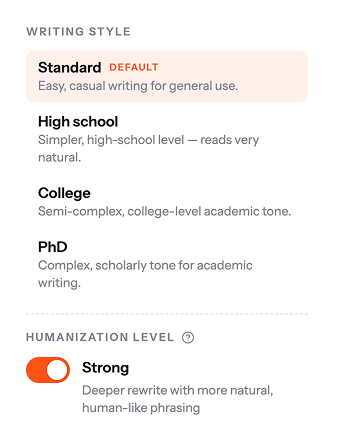
- Choose the desired level of readability






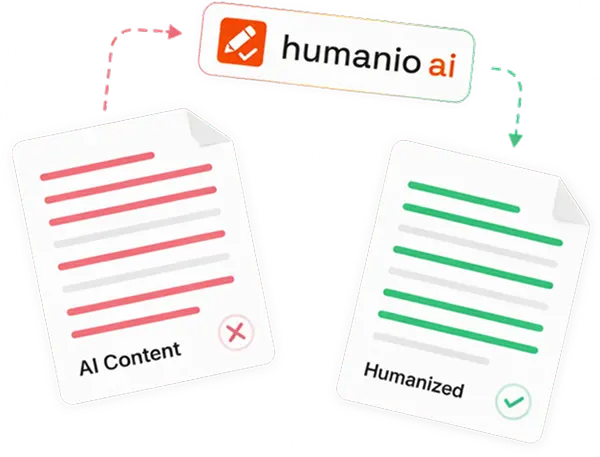
If you already use AI to speed up CV writing, the goal is not to undo that process. The goal is to keep the efficiency while making the final version sound more natural, more credible, and more personal. Humanio helps you humanize CVs without flattening achievements, weakening bullet points, or turning everything into bland professional copy.
What matters in this workflow is not only sounding human. It is sounding accurate, specific, and ready for real hiring situations. That is why we focus on the final refinement step instead of treating rewriting like a magic trick.
Humanio works as a humanizer for CVs by improving tone, phrasing, and readability without changing the factual substance of your resume or professional profile.
A strong CV humanizer should preserve resume bullets, role-specific details, and professional tone instead of replacing them with vague polish.
Humanio is useful for resumes and CVs, profile summaries, LinkedIn summary sections, and other recruiter-facing writing that starts with AI assistance.
The best workflow is still draft, humanize, tailor, and review before you submit any application materials.
Humanize CVs Without Losing the Facts
Most people looking for a humanizer for CVs do not want a total rewrite. They want help taking a usable AI draft and turning it into something that sounds more like a person with real experience wrote it. That difference matters because strong CV writing is not only about listing information. It is about presenting that information in a way that feels clear, credible, and purposeful.
A raw AI CV often gets the basic ingredients right. It can produce a summary, create bullet points, and organize experience into a format that looks familiar. The problem is that the language often comes out too standardized. Every bullet seems to follow the same pattern. Every accomplishment sounds inflated in the same way. Every summary line feels like it was pulled from the same warehouse of professional cliches.
That is why Humanio focuses on refinement instead of surface-level paraphrasing. We help humanize CVs while preserving the things that cannot be treated casually:
your real job titles and employers
the dates and scope of your work
the meaning of your resume bullets
the role-specific details that support your applications
the professional tone needed for serious hiring workflows
If those elements drift, the rewrite is not useful. A better CV should still sound like your background. It should just sound less robotic, less templated, and more like writing shaped by judgment.
This is especially important for recruiter-facing writing. Hiring teams do not only look for keywords. They also react to whether the profile feels specific, readable, and grounded. Humanio helps move an AI-assisted draft closer to that standard without forcing you to rebuild the document from scratch.
Why AI-Generated CVs and Resumes Still Feel Generic
The biggest weakness in many AI-generated resumes and CVs is not that they are wrong. It is that they are average. The wording often sounds like the statistical middle of thousands of professional documents. That makes the writing look competent, but it also makes it easy to forget.
This usually shows up in a few familiar ways:
repetitive bullet points that all start with the same rhythm
vague claims about results, collaboration, or leadership
professional summaries that sound polished but say very little
over-formal language that feels distant from real speech
profile sections that could fit almost any candidate
That sameness creates a weak first impression. A CV does not need personality in the same way a social post does, but it still needs a believable point of view. The writing should feel like it belongs to one person with one work history, not like a generic template was filled in by a machine.
Professional tone can also become a problem when AI overcorrects for formality. Instead of sounding credible, the text starts sounding padded. Instead of sounding efficient, it becomes repetitive. Instead of sounding confident, it turns into a string of stock phrases about impact, results, and excellence.
That is a poor fit for real hiring workflows. Recruiters and hiring managers often scan quickly. If the summary feels flat or the bullet language feels recycled, the document may lose force even when the facts are solid. Humanio helps address that by improving sentence movement, softening stiff phrasing, and making the document easier to read as professional writing.
If you are looking for an AI humanizer for CVs, that is the deeper job to be done. The goal is not to make the text merely different. The goal is to make it feel more authored.

How Humanio Works as a Humanizer for CVs
The workflow is simple because the value is in the final pass, not in extra complexity.
Start with your AI-assisted CV, resume summary, or profile section.
Paste it into Humanio.
Let us improve the tone, natural phrasing, and readability.
Review the revised version and tailor it to the role before submission.
This works because most resumes and CVs do not fail due to a lack of content. They fail because the content is presented in language that sounds too generic. The facts may already be there. The problem is that the writing does not help those facts land.
Humanio helps humanize CVs by working on the patterns that often make AI writing feel machine-produced:
repetitive sentence openings
stiff bullet language
overused summary phrasing
transitions that sound artificial
over-polished wording that weakens clarity
We focus on improving the language while preserving the structure and meaning behind it. That makes the workflow practical for real job seekers. You can still use AI for drafting speed, idea capture, and first-pass organization. Then you use Humanio to refine the final version into something that feels cleaner, more readable, and more believable.
This is also why Humanio works across different professional formats. Some users need a more polished resume summary. Some need sharper bullet wording for recent roles. Some need a stronger LinkedIn summary or a cleaner professional profile paragraph. A humanizer for CVs should support those variations instead of forcing everything into one generic final voice.
A Humanizer for CVs Should Keep Resume Bullets and Structure Intact
One of the biggest concerns around any CV humanizer is losing the exact details that make the document useful. That concern is real. A resume can become smoother and weaker at the same time if a rewrite strips out specifics, softens metrics, or turns concrete achievements into broad claims.
That is why Humanio treats preservation as part of quality. The point is not to make every line sound grander. The point is to keep the elements that give the document weight:
resume bullets tied to actual work
summary lines that reflect real strengths
professional profile language that still sounds truthful
role relevance for specific applications
ATS-friendly writing that does not break the structure
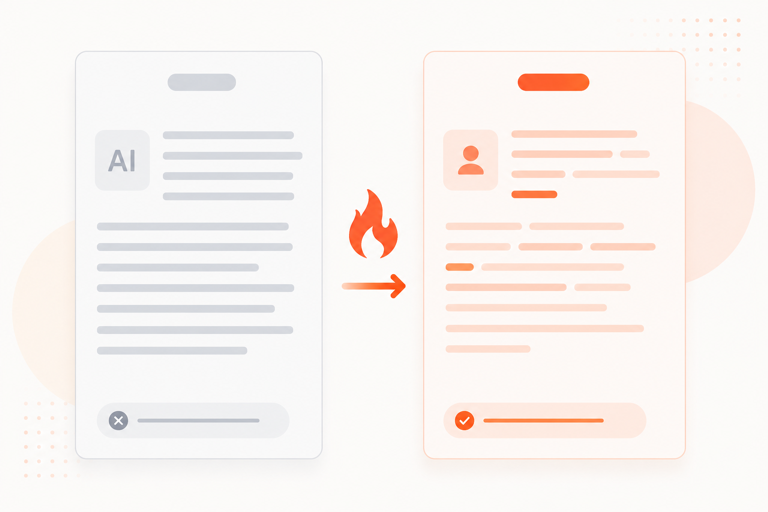
This balance matters because resumes and CVs have a narrow tolerance for drift. If the language is too generic, the document feels forgettable. If it becomes too flashy, the writing can feel inflated. If it becomes too polished, it can read like a template instead of a record of actual work.
Humanio helps by making the text more natural without changing the core reality of what you are saying. Your achievements should still sound like your achievements. Your experience should still sound tied to real responsibilities. Your summary should still feel professional enough for serious applications while carrying a more authentic tone.
That is also important for ATS-friendly writing. Humanizing the text should not mean breaking the formatting logic of your resume or removing the role terms you actually need. You still want the document to remain structured, readable, and aligned with the job you are targeting. Humanio helps you improve the language around those details, not erase them.
If you want a broader category comparison before choosing a workflow, our page on the best AI humanizer can help you explore the landscape.
Humanizer for CVs Use Cases: Summaries, LinkedIn Profiles, and Job-Search Writing
The need to humanize CVs is not limited to one document type. The same writing problem shows up across many pieces of job-search content that start with AI assistance and still need a more human final pass.
For resumes and CVs, that may mean improving bullet wording so responsibilities sound clearer and less repetitive. For a professional profile or resume summary, it may mean turning a flat block of polished language into something more specific and more readable. For a LinkedIn summary, it may mean keeping a professional voice while reducing the stiffness that makes the section feel generic.
Humanio supports those use cases because the underlying challenge is the same. The draft already contains the right subject matter, but the final writing still needs:
more natural sentence rhythm
clearer wording in bullet points
stronger professional voice
less generic summary language
a better first impression during recruiter screening
This is especially useful when you are tailoring documents for multiple roles. AI can help you generate versions quickly, but speed alone is not enough. If every version sounds like the same processed draft with a few keywords swapped in, the result still feels low-signal. Humanio helps you keep the drafting advantage while improving the final quality of each version.
The same logic applies to adjacent materials. A clean LinkedIn summary, a short professional bio, or a profile section inside a portfolio can all benefit from the same refinement approach. If you use Humanio across those formats, the result is not just better wording in one place. It is a more consistent professional voice across your whole job-search presence.
If your writing workflow also includes adjacent long-form material, our guide on how to humanize AI text shows how this editing approach can extend beyond resumes and CVs.
Why Humanio Is a Better Fit Than Generic Resume Humanizers
Many competitors frame this category around instant transformation, one-click rewriting, or detector-heavy messaging. That can make the process sound easier than it is. In real hiring workflows, a useful humanizer for CVs has to do more than make wording look different.
It has to help the document sound more considered.
That is where Humanio is a better fit. We focus on practical improvements that matter in resumes and CVs:
more natural phrasing
clearer bullet wording
stronger readability
less robotic professional language
better alignment between the document and the person behind it
We are not trying to turn your profile into a generic “improved version” that could belong to any candidate. We are trying to help you keep the speed benefits of AI drafting while making the final result feel more human, more credible, and more useful in real applications.
That distinction matters because resumes are trust documents. Even in a compact format, they carry a lot of weight. The reader is not only checking whether you mention the right skills. They are also reacting to whether the professional profile sounds thoughtful, whether the bullet language feels grounded, and whether the overall document feels authored instead of assembled.
This also makes the workflow more sustainable over time. If you often use AI to speed up updates to your CV, resume summary, or role-specific versions, you do not need to restart manually every time. You need a reliable way to turn rough drafts into stronger final versions faster. That is the role Humanio is built to play.
If your professional writing also includes outreach or application letters, our Humanizer for Cover Letters page shows how the same refinement process applies to that format too.
Final Review Still Matters Before You Submit
Even the best humanizer for CVs should be part of your process, not the entire process. Once Humanio improves the draft, take one more pass before you send anything out. That final review protects the details that matter most in resumes and CVs.
Focus on a few high-value checks:
Are the dates, job titles, and employer names still correct?
Do the resume bullets still reflect your actual work and achievements?
Did any metrics, tools, or role-specific details become too broad?
Does the professional tone fit the roles you are targeting?
Is the wording still ATS-friendly and easy to scan?
Does the summary sound like something you would actually stand behind?
This last pass is also where you can read the document aloud. That simple check helps catch awkward rhythm, inflated wording, and lines that still sound more machine-produced than human. It is often the fastest way to spot whether a bullet or summary line needs one more edit.
That final review is not optional busywork. It is what turns an improved draft into a document you can submit with confidence. AI can help you build the first version. Humanio can help you refine it. You should still make the final call on whether the CV represents you accurately.
If you are ready to move from rough AI drafts to stronger job-search writing, you can review our pricing to see where Humanio fits into your workflow.
Frequently asked questions




Humanio gives you a stronger humanizer for CVs because the focus stays on better writing, not just different writing. You keep the speed of AI drafting, but you get a final version that sounds more natural, more personal, and more credible to real readers. If you want a humanizer for CVs that helps AI-assisted resumes and profiles sound more natural without losing the facts, start with Humanio. We help you refine rough drafts into stronger, clearer documents that feel more believable and more ready to submit.