AI Resume Humanizer: Make an AI-Drafted Resume Sound Like You
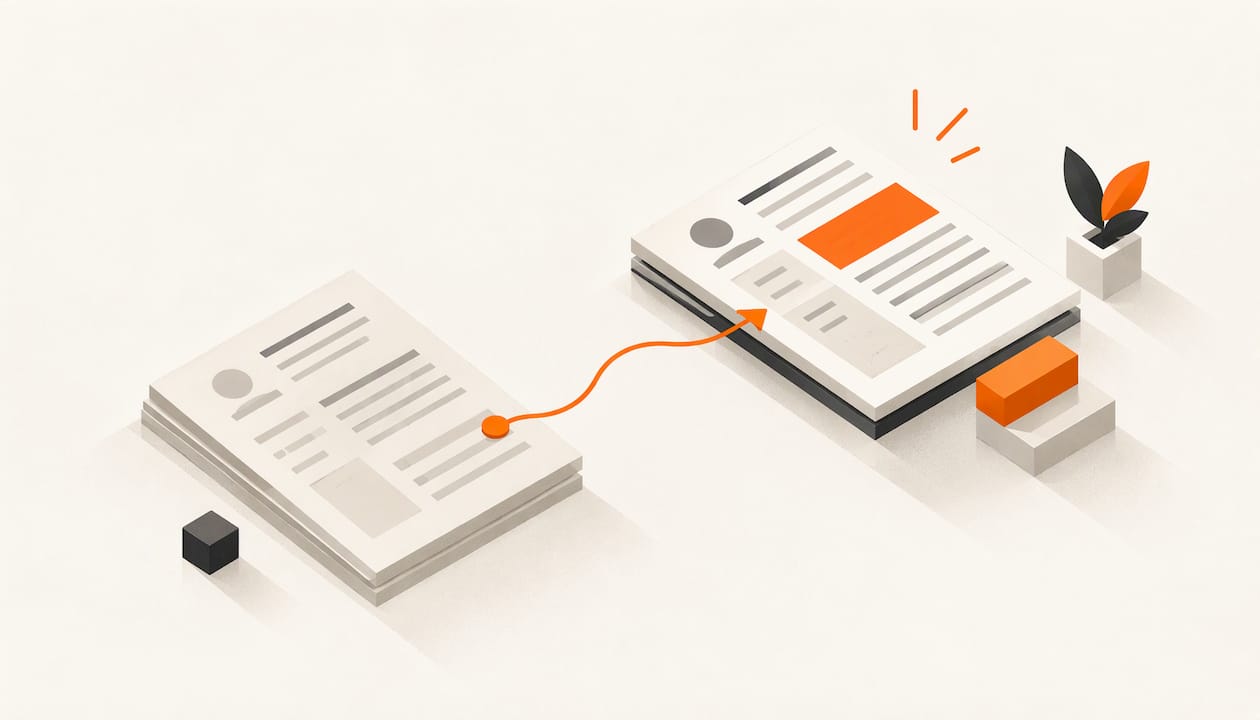
An AI resume humanizer rewrites a machine-drafted resume so it reads like a person wrote it, while your facts, dates and keywords stay put. It works best on a draft that starts from your real experience. You then edit the result until every line is something you could explain in an interview. We built Humanio for this kind of rewrite: sentence-level changes with adjustable intensity, aimed at preserving meaning, keywords and your voice.
TL;DR
- Hiring managers say they can often spot AI resumes. The tells are an off tone and thin detail, so the fix is voice and specifics, not just new words.
- Start from your own experience. Use AI to tighten it, never to invent it.
- Keep the job-description keywords, but put them inside real accomplishments rather than in a list of buzzwords.
- Choose a light edit for a resume you mostly wrote yourself and a deeper rewrite for a stiff, generic draft.
- Read it aloud and confirm every line is true before you submit.
Table of Contents
- Why a humanizer matters for resumes
- What makes an AI resume sound robotic
- How to humanize an AI-written resume, step by step
- Where the line is: editing versus misrepresenting
- Detectors and what they mean for a resume
- A pre-submission checklist
- Try it on your own draft
- FAQ
- Sources
Why a humanizer matters for resumes
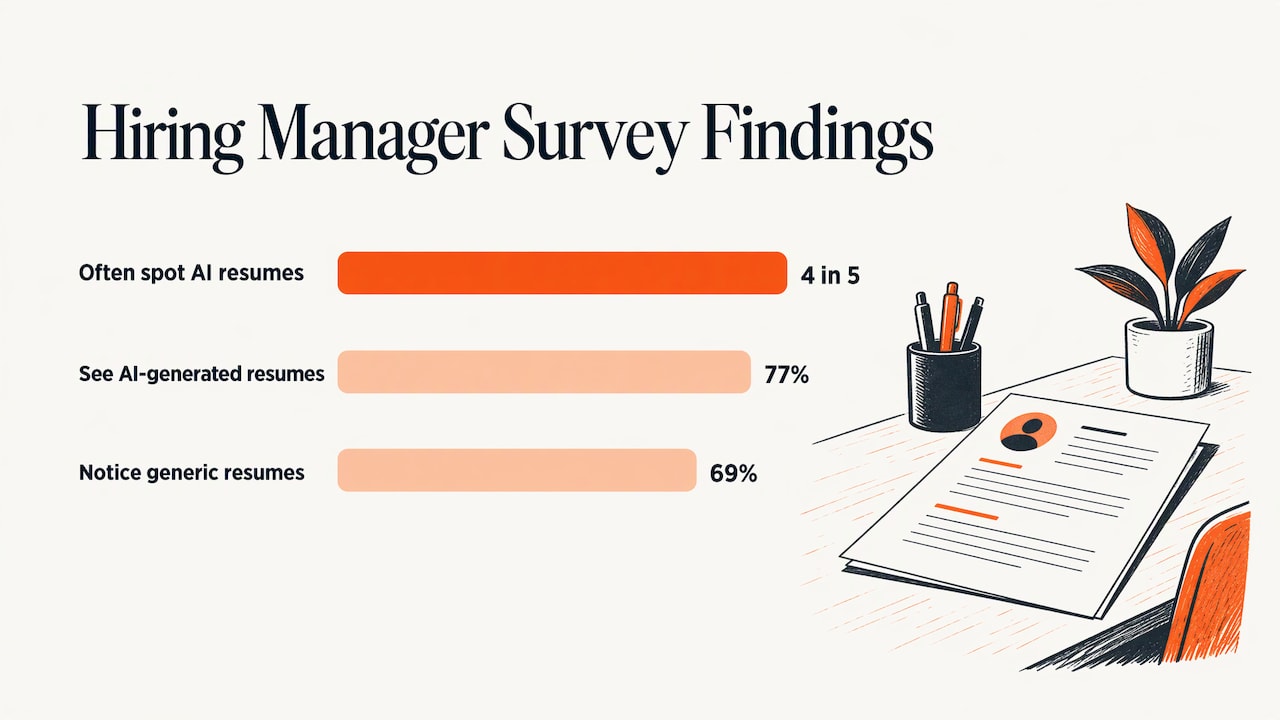
Resumes are short, so a few generic sentences stand out. A Resume Genius survey of 1,000 U.S. hiring managers, reported by Forbes, found that four in five say they can often tell when a resume was written by AI. They pointed to tone that sounds off and details that feel thin. The same report says 77% of those managers believe many resumes look fully or partly AI-generated, and 69% say resumes seem more generic or formulaic than five years ago.
Speed matters too. In TopResume’s 2025 survey, 33.5% of hiring managers said they identified AI-written resumes in under 20 seconds, and 19.6% of recruiters said they would reject a candidate whose resume or cover letter was AI-generated. Those are survey responses, not rules, but they show what a reader’s first impression costs.
Using AI is not the problem. U.S. government career guidance from CareerOneStop treats AI resume writing as legitimate, as long as you edit the draft so it is personal and accurate. The risk is the unedited draft: smooth, polished and interchangeable with a thousand others.
What makes an AI resume sound robotic
You can learn to see the patterns yourself. Look for:
- Vague verbs. “Spearheaded initiatives,” “leveraged synergies,” “drove results.” They say nothing about what you actually did.
- Repeated structure. Every bullet opens with the same kind of verb and ends with the same “resulting in” clause.
- Overly formal language. CareerOneStop advises removing unnatural or overly formal wording.
- No context. No team size, constraint, tradeoff or reason the work mattered.
- Exaggeration. AI can inflate or fabricate experience, which CareerOneStop warns you to check for line by line.
A before-and-after shows the difference. Here is a typical generated bullet:
Leveraged cross-functional collaboration to drive impactful marketing outcomes and optimize campaign performance.
And a version grounded in real work, which only you can supply:
Worked with sales and design to rebuild our webinar follow-up emails, lifting registrations-to-attendance from 31% to 44% over two quarters.
The second one is not a synonym swap. It names the work, the partners and the number. Recruiting firm redShift Recruiting makes the same point in its guide to humanizing an AI-assisted resume: replace vague verbs with ones that show real ownership, and add context such as constraints, tradeoffs and team dynamics.
How to humanize an AI-written resume, step by step
1. Start from your own material
Harvard’s Mignone Center for Career Success recommends starting with your existing resume and details about your impact and relevant numbers, then asking for edits section by section or bullet by bullet. Brown University’s CareerLAB gives the same order: draft first, then use AI to clarify the language.
Write rough bullets for each role: what you owned, who you worked with, what changed, and a number if you have one. Ugly is fine. Facts are what matter.
2. Run the draft through a humanizer in sections
Paste one section at a time rather than the whole document. That keeps each rewrite focused and makes it easy to compare against your original. In Humanio you choose the intensity: a light edit smooths phrasing and trims repetition, while a more substantial rewrite restructures sentences. Because it rewrites at the sentence level instead of swapping synonyms, the meaning and the keywords you care about are meant to carry through. We have a page for humanizing a CV and one for cover letters if you are polishing the full application.
Pick the intensity by the state of the draft:
| Your draft | Suggested setting |
|---|---|
| Written by you, with a few stiff lines | Light edit |
| AI-assisted, mostly accurate, a bit repetitive | Light to moderate |
| Fully generated, formulaic and formal | Structural rewrite, then add your own details |
3. Put your specifics back in
No tool knows your project budget, your team of six or the customer you saved. The Dice career advice piece, quoting hiring experts, recommends proofreading AI-assisted wording and changing generic phrasing and formatting so the resume does not look formulaic. It also suggests adding personal research and details that show your distinctive value.
For each bullet, ask three questions: What exactly did I do? What changed because of it? Would a stranger be able to picture it?
4. Keep the keywords, in context
Most U.S. employers use applicant tracking systems (ATS), software that receives applications and filters them for preset qualifications, according to CareerOneStop. It recommends aiming the resume at a specific job title and using relevant keywords in the experience, skills and summary sections.
Harvard’s career office adds practical formatting advice: use basic formatting, list your skills explicitly, and include job-description keywords in context. Brown’s CareerLAB warns against keyword stuffing that sounds forced. And redShift argues keywords work best when embedded in clear accounts of real work.
A simple routine:
- Copy five to eight recurring terms from the job posting (tools, methods, certifications you actually hold).
- Check each one appears at least once in a bullet that describes real use of it.
- After humanizing, search the new text for those terms. If one disappeared, work it back in.
Humanio is designed to preserve important keywords during a rewrite, but a quick search of the finished text takes a minute and is a good habit before any submission.
5. Read it aloud and own every line
Harvard’s guidance is blunt: the wording should accurately and authentically depict your experience, and you should be able to discuss every line. Reading aloud catches repeated openers, clunky transitions and anything that sounds like a brochure. The University of New Hampshire’s career center says AI should assist rather than author your career documents, and that the voice should reflect how you speak.
Test each bullet: could you tell the story behind it in 60 seconds in an interview? If not, rewrite it or cut it.
Where the line is: editing versus misrepresenting
Employers are explicit about this. T. Rowe Price’s candidate AI guidelines allow AI to improve structure, clarity or grammar, but require that the application reflect your authentic experience, perspective and voice. Humanizing is editing. Adding a title you never held, a metric you never hit or a skill you do not have is misrepresentation, no matter which tool produced it.
Two safe-use points:
- Check every number and title against your records after any rewrite.
- Keep sensitive details out of prompts. Harvard cautions against sharing personal or proprietary information with generative AI when preparing application documents. Leave out home address, ID numbers and confidential employer data.
Detectors and what they mean for a resume
People often ask whether a resume will be run through an AI detector. The sources above describe human readers who notice tone and thin detail, and one professional body notes there is no official marketed technology for detecting AI in applications, though employers may notice generic, stilted or inconsistent language. That is a UK health-sector view, but the lesson travels: the reader is the detector. Humanio has been tested against popular AI detectors including GPTZero, ZeroGPT and Pangram, with results that vary by text and detector. If you want to see how a draft scores, there is a Humanio AI detector. The more reliable approach is a resume with real specifics that a person can believe.
A pre-submission checklist
Before you upload:
- Every employer, title, date and number matches your records.
- The resume targets one job title and uses the posting’s keywords in context.
- Formatting is basic: standard headings, no text boxes or graphics holding key information.
- No two bullets start with the same verb in a row.
- You read it aloud and nothing sounded like someone else.
- You can discuss each line without notes.
Try it on your own draft
If your resume draft came from ChatGPT, Claude or Gemini and reads stiff, Humanio rewrites it sentence by sentence, with intensity you set, while aiming to keep your meaning and keywords intact. Plans are Starter at $6.99 per week, Pro at $9.99 per week and Business at $19.99 per week, listed on the pricing page. You can start with the Humanio AI Humanizer.
Work through the resume one section at a time, then finish with the checklist above. The tool smooths the language and you supply the facts.
FAQ
Can employers tell if my resume was written by AI?
Often, yes. In a Resume Genius survey reported by Forbes, four in five U.S. hiring managers said they can often tell, citing an off tone and thin detail. Specific, accurate accomplishments written in your own voice are what make a resume read as human.
Will humanizing change my keywords or experience?
It should not change your facts, and Humanio is built to preserve meaning and important keywords. Even so, compare the result with your original and search for your target keywords before submitting.
Is it acceptable to use AI on a resume at all?
U.S. career guidance from CareerOneStop treats AI resume writing as legitimate when you edit for accuracy and a personal voice. Some employers, such as T. Rowe Price, allow AI for structure, clarity and grammar as long as the content is authentically yours.
How much should I humanize: light edit or full rewrite?
Use a light edit when you wrote most of the content and want smoother phrasing. Choose a structural rewrite when the draft is generic or formal, then add your own numbers and context afterward.
Sources
- 8 In 10 Hiring Managers Spot AI Resumes (Forbes)
- Survey: Where Employers Draw the Line on the Use of AI in Hiring (TopResume)
- Write your resume for current hiring practices (CareerOneStop)
- Humanizing the AI-Assisted Resume (redShift Recruiting)
- AI for Resumes and Cover Letters (Harvard FAS Mignone Center)
- Resumes and Cover Letters with AI (Brown University CareerLAB)
- Stop Letting AI Sabotage Your Resume (Dice)
- AI guidelines for candidates (T. Rowe Price)
- Guidance on the use of AI in candidate applications (NHS Employers)