AI Writing Style: What It Sounds Like and How to Fix It

AI writing has a recognizable style: tidy, confident, evenly paced and oddly impersonal. It comes from how language models are trained, and you can change it. The fastest route is to rewrite at the sentence level, not swap synonyms, which is what Humanio’s AI Humanizer is built to do while keeping your meaning and keywords intact. Below you’ll find what the style consists of, how it varies by model and genre, and a revision routine you can use on any draft.
TL;DR
- AI text tends toward noun-heavy, information-dense prose, stock transitions, uniform structure and bland wording.
- The style is not one fixed voice. It shifts with the model, the prompt and the genre.
- These patterns are tendencies, not proof of authorship, and detectors are unreliable on style alone.
- Fix a draft by adding specifics, varying rhythm, connecting ideas and reading it aloud.
- Humanio rewrites at the sentence level with adjustable intensity, from light edits to a structural rewrite.
Table of Contents
- What “AI writing style” actually means
- The patterns that make a draft sound robotic
- It is not one voice: model, prompt and genre
- Same idea, two voices
- How to revise an AI draft, step by step
- Who needs this most
- Style alone does not prove AI wrote it
- Making your drafts sound like you
- FAQ
- Sources
What “AI writing style” actually means
An AI writing style is the set of grammatical and rhetorical habits that show up in model-generated text. A 2025 study in PNAS found that instruction-tuned models favor noun-heavy, information-dense writing, even when they are asked to imitate informal speech. In plain terms: the sentences carry a lot of nouns and packed phrases, and less of the looseness of how people talk.
That is why a draft can be grammatically flawless and still feel off. Nothing is wrong with it. Nothing in it is personal either.
The patterns that make a draft sound robotic
Researchers and writing centers describe the same cluster of tendencies. The VU Amsterdam guide to spotting AI writing lists repetitive sentence structures and vocabulary, uniform introductions and conclusions, broad confident statements, very few visible errors, heavy use of headers and bland wording.
Here is what that looks like on the page.
Stock vocabulary
Scientific American’s 2025 comparison names verbs ChatGPT leans on, such as “delve,” “align” and “underscore,” and adjectives such as “noteworthy,” “versatile” and “commendable.” It also reports a preference for standard grammar and academic expressions over slang and colloquialisms. If your email says a project “underscores a versatile approach,” a reader hears a template.
Sameness of structure
Stony Brook University’s AI Innovation Institute reported in 2025 that GPT-4, Claude 3.5 Sonnet and Llama 3.1 70B shared weaknesses: overused structures, limited stylistic diversity and weak narrative nuance. The researchers call this an “algorithmic monoculture.” Every paragraph opens with a claim, adds three supporting points and closes with a neat summary. After a few paragraphs, the reader can predict the next one.
Vague wording
AI favors safe, general adjectives. The Westcliff University Writing Center’s guide to avoiding AI-like writing shows the fix in one small edit: “Effective tools for analysis” becomes “Scalable tools for database performance analysis.” The second version names the field and the quality that matters.
Too clean
Human drafts have uneven rhythm, a short sentence after a long one, a digression, an opinion. AI text rarely does. Polish itself becomes the signal.
It is not one voice: model, prompt and genre
It is tempting to talk about “the” ChatGPT style. There isn’t one. OpenAI’s Help Center explains that ChatGPT’s tone depends on the personality setting, your direct instructions, saved preferences and the task. For things like emails or résumés, instructions and context can take precedence over the personality.
The PNAS study also measured differences between GPT-4o and Llama 3 variants. They persisted across model sizes and were larger in instruction-tuned models than in base models.
Genre matters too. A 2023 ChatGPT-4 study found distinct profiles for case studies, business correspondence and academic writing. Case-study output often used two- to three-sentence paragraphs and second-person address, while business correspondence was more declarative and technical.
Practical takeaway: you can’t clean up every draft with one rule. A marketing email, an essay and a blog post each show the style differently. If you want to see how two popular models compare, our post on ChatGPT vs Claude for writing walks through it.
Same idea, two voices
Here is a made-up example of a product update, written the way a model often writes it and then revised.
| Typical AI draft | Revised draft |
|---|---|
| In today’s competitive landscape, our new dashboard offers a versatile solution that underscores our commitment to data-driven decisions. | The new dashboard shows last week’s sales by region on one screen. Most teams stop exporting spreadsheets on day one. |
| It is noteworthy that users can seamlessly customize their experience. | You can pin the three reports you check every morning. |
What changed: the revision names the thing, gives a concrete detail, drops the stock adjectives and varies sentence length. The meaning is the same. The voice is a person’s.
How to revise an AI draft, step by step
The Westcliff guide recommends replacing vague wording with specific terms, varying sentence structure, connecting ideas, integrating citations and reading aloud to check rhythm. Here is that turned into a routine.
- Mark the stock words. Search your draft for the words listed above and for phrases like “in today’s world.” Replace each with the plain thing you mean. Doing this by hand across a long document is slow, and swapping single words often leaves the same skeleton behind.
- Add specifics. Every general adjective should become a number, a name, a place or an example only you know.
- Vary the rhythm. Combine two short sentences, or break up a long one. Aim for a mix within each paragraph.
- Break the template. If every section opens with a claim and ends with a summary, change one or two. Start with the example. Skip the recap.
- Connect ideas. Replace stock transitions with the actual logic: because, but, which means.
- Put your opinion in. One sentence of judgment does more for voice than any polish.
- Read it aloud. Anything you would never say to a colleague gets rewritten.
Humanio takes on steps 1, 3 and 4 in one pass. It rewrites at the sentence level rather than swapping synonyms, and you choose the editing intensity, so a light polish on a strong draft and a structural rewrite on a stiff one are both options. Meaning and important keywords are preserved, which matters for SEO copy and academic work. You still add steps 2 and 6, since those are your knowledge.
Who needs this most
- Marketers and copywriters: generic phrasing weakens landing pages and ads. See our guides for SEO articles and website content.
- Students: essays need your own argument and voice. Our post on humanizing AI content for a research paper covers keeping academic quality.
- Bloggers and freelancers: readers return for a recognizable voice, and an even, templated tone erodes it.
- Professionals: emails and reports land better when they sound like a colleague wrote them.
Style alone does not prove AI wrote it
If you are worried that a polished paragraph will be flagged, know the limits of the evidence. The VU Amsterdam guide says stylistic clues are not proof, because human writing can share these tendencies, and prompting or humanizers can remove some of them. A 2025 ACL study found detector performance highly sensitive to style and text complexity, with some classifiers dropping to random performance under certain conditions. Earlier work in Computational Linguistics found that stylometry could identify provenance in some settings but could not reliably separate legitimate from malicious uses of language models.
So the goal is not to game a score. It is to produce writing that reads well. Humanio has been tested with detectors including GPTZero, ZeroGPT and Pangram, though results vary with the text and the detector. If you want to see how your own text looks, the free AI detector shows AI signals in a passage, and our overview of how AI content is detected explains the patterns.
Making your drafts sound like you
Start with the model you use. Output from ChatGPT, Claude and Gemini each has its habits, and Humanio works on text from multiple AI models for essays, articles, emails and other content.
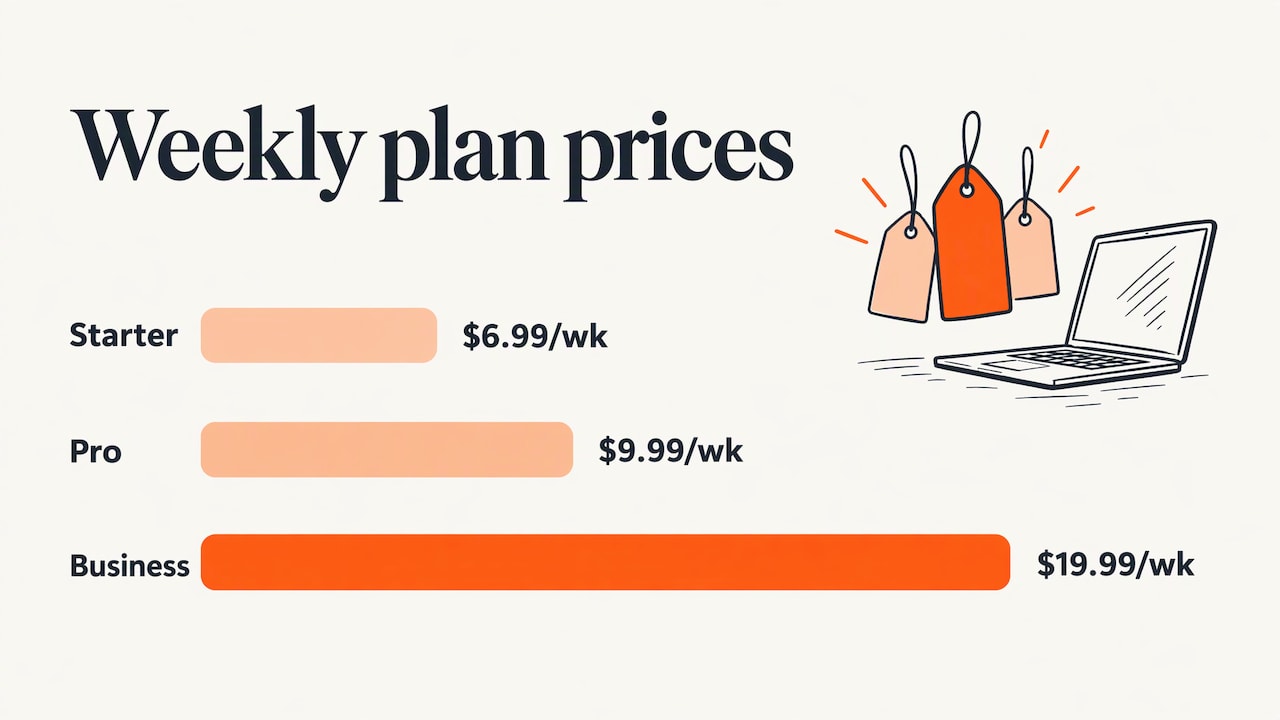
Paste the draft into the AI Humanizer, choose how far it should go, then do your own pass for specifics and opinion. Plans are Starter at $6.99 per week, Pro at $9.99 per week and Business at $19.99 per week, all on the pricing page.

FAQ
What writing style does ChatGPT use?
There is no single style. OpenAI says tone depends on the personality setting, your instructions, saved preferences and the task. Left on defaults, it tends toward standard grammar, academic phrasing and information-dense sentences.
What are common AI writing styles?
They vary by genre. Studies describe case-study output with short paragraphs and second-person address, business correspondence that is declarative and technical, and academic output with its own profile. Across all of them, repetitive structure and vague wording recur.
Can you tell AI writing by its style?
Not reliably. Polished grammar, repeated vocabulary and uniform structure are possible cues, but human writers share them. Treat them as reasons to revise, not as proof of authorship.
How do I make AI writing sound more human?
Replace vague words with specifics, vary sentence length, connect ideas with real logic, add your own opinion and read it aloud. Humanio can handle the sentence-level rewriting so you spend your time on the details only you know.
Sources
- Do LLMs write like humans? Variation in grammatical and rhetorical styles (PNAS, 2025)
- ALP Guide: Spotting AI writing (VU Amsterdam)
- ChatGPT and Gemini AIs Have Uniquely Different Writing Styles (Scientific American)
- Can AI Writing be Salvaged? (Stony Brook University)
- Avoiding AI-Like Writing (Westcliff University Writing Center)
- Customizing Your ChatGPT Personality (OpenAI Help Center)
- Do Artificial Intelligence Chatbots Have a Writing Style? (JAIT, 2023)
- Exploring the Limitations of Detecting Machine-Generated Text (ACL, 2025)
- The Limitations of Stylometry for Detecting Machine-Generated Text (ACL, 2020)
Recommended
- Humanizer for X Posts and Threads: Make X Posts Sound More Natural
- How to Humanize AI Content for a Research Paper Without Losing Academic Quality
- How to Humanize AI Content in Claude: Best Practices for Natural, Undetectable Writing
- How AI Content Is Detected: Top Patterns, Words, and Writing Signals to Avoid